
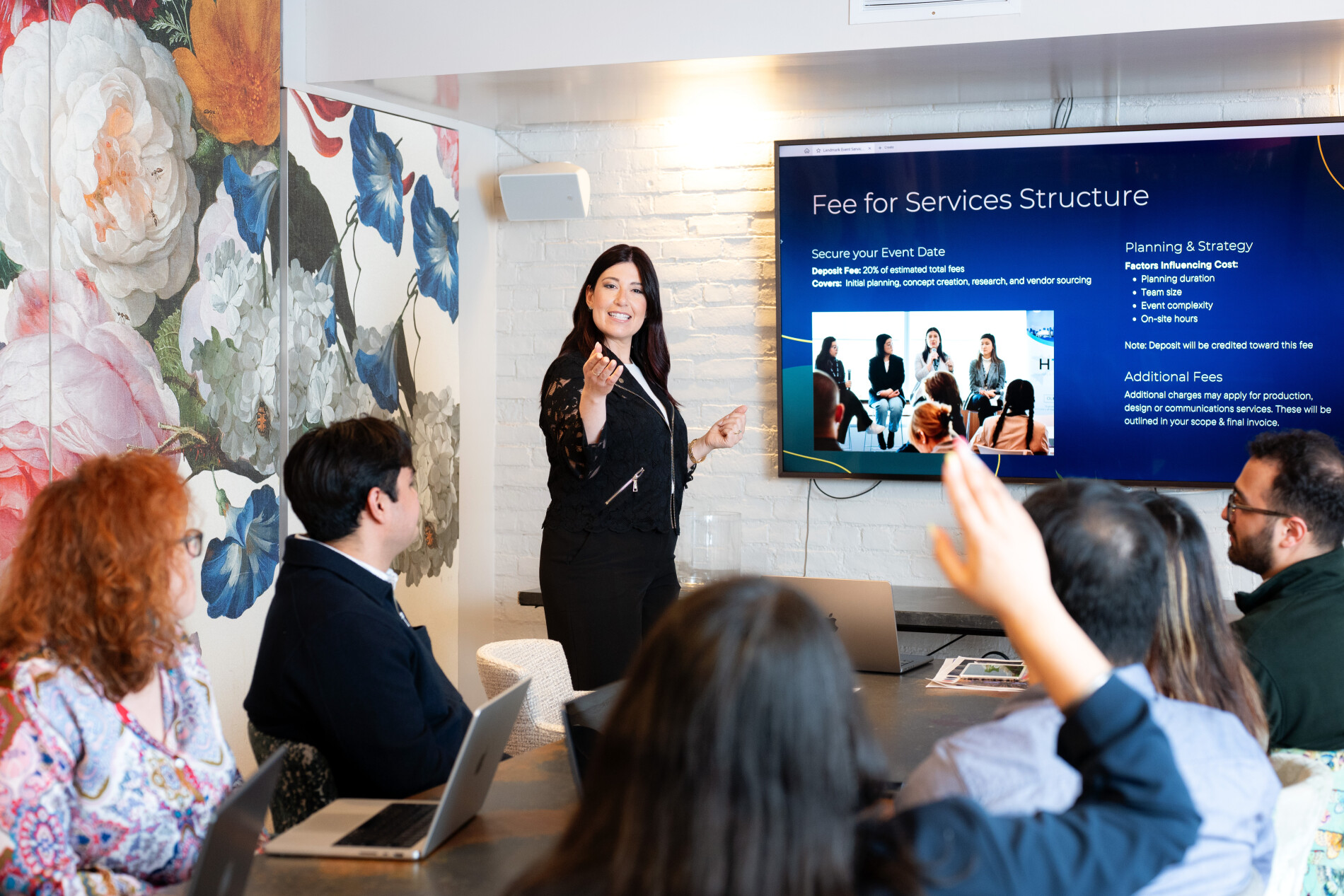
Most event delays do not come from poor execution. They come from leadership gaps upstream.
Teams stall when decisions are unclear, ownership is fuzzy, or strategy keeps shifting mid-stream. As a result, timelines slip, costs rise, and internal confidence drops. Meanwhile, the event team absorbs the pressure.
Here are five common event bottlenecks that slow teams down, along with the leadership fixes that remove friction before it shows up onsite.
Bottleneck #1 – The Event Exists, But the Purpose Is Fuzzy
When teams cannot clearly articulate why an event exists, everything takes longer. Decisions feel heavier. Trade-offs turn political. Every choice becomes a debate.
You see this show up as:
- Endless revisions to the scope
- Last-minute changes that contradict earlier direction
- Teams are optimizing for attendance instead of outcomes
The leadership fix: Lock the strategic purpose early and protect it.
Strong event leaders insist on a clear Event Brief that defines success beyond headcount. This document becomes the single source of truth before execution energy kicks in. It answers what this event is for, who it is not for, and what trade-offs leadership has already approved.
When the purpose is clear, teams move faster because they are not guessing.
Bottleneck #2 – Decisions Keep Circling Back to the Same People
If every decision needs senior approval, progress slows to a crawl. Teams wait. Leaders get pulled into details. Momentum dies. This usually sounds like:
- “Let’s just check with leadership.”
- “I’m not sure if we’re allowed to decide that.”
- “We already approved this… didn’t we?”
The leadership fix: Create a shared Event Decision Framework.
This framework clarifies priorities before pressure rises. It tells teams what to optimize for when choices conflict. For example, relationships over impressions or clarity over creativity.
With this in place, teams stop escalating every decision, and leaders stop re-litigating choices they already made. Execution speeds up without sacrificing control.
Bottleneck #3 – Cross-Department Confusion Slows Execution
Events sit at the intersection of marketing, operations, partnerships, finance, and leadership. Without alignment, work stalls at every handoff.
You might notice:
- Teams duplicating work
- Missed deadlines blamed on “miscommunication.”
- Friction between departments that should be collaborating
The leadership fix: Run a real internal kickoff, not a status update.
A strong cross-department kickoff translates strategy into how teams will actually work together. It clarifies responsibilities, decision rights, and escalation paths early.
This meeting sets expectations that teams should think, not just execute tasks. When everyone understands how their work connects, dependencies stop becoming delays.
Bottleneck #4 – Subjective Debates Drain Time and Energy
Without a shared vision, creative and experiential decisions drag on. Teams debate preferences instead of intent. Vendors wait. Production timelines compress.
This often shows up as:
- Endless back-and-forth on design
- Late changes that impact print and fabrication
- Frustration between marketing and events
The leadership fix: Align early through a clear Event Look Book.
A Look Book is not decoration for its own sake. It anchors decisions to audience emotion, brand, and flow. It helps teams and vendors understand intent, not just specs.
When vision is shared early, subjective debates disappear, and timelines stabilize.
Bottleneck #5 – Execution Lives in Too Many Places
When critical information is scattered across emails, spreadsheets, and chat threads, teams slow down just trying to find answers. Mistakes increase. Stress spikes onsite.
You will hear:
- “Which version is correct?”
- “I didn’t see that update”
- “Who approved this?”
The leadership fix: Centralize execution in a single operational command centre.
Strong event leaders maintain a single, controlled master document that contains the run of show, contacts, schedules, staffing, contingencies, and escalation paths. This is not collaborative chaos. It is owned, updated, and protected.
Over time, this document becomes organizational muscle memory, dramatically reducing friction during delivery.
The Real Pattern Behind Event Bottlenecks
Event bottlenecks are rarely about effort.
They are about decision clarity, ownership, and systems.
When leadership sets the frame early, teams move faster, feel more confident, and deliver better outcomes. The event becomes easier to run not because it is simpler, but because it is better led.
If your team feels stuck, the fix is rarely more hustle.
It is a stronger leadership infrastructure.